Archive for February, 2011

Feb 26 2011

Rasht, Gilan

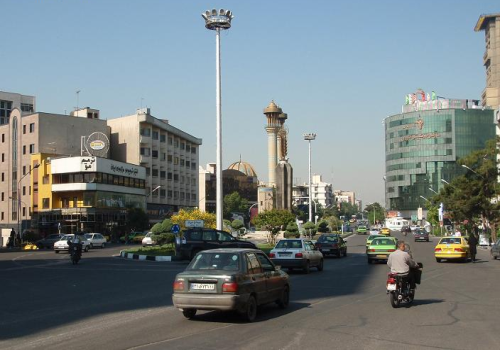
Rasht (Persian: رشت) is the capital of Gilan province in northwestern Iran and the largest city along the Caspian sea coast (37°17′N 49°35′E).
It is a major trade center between Caucasia, Russia and Iran using the port of Bandar-e Anzali. Rasht is also a major tourist center with the resort of Masouleh in adjacent mountains and the beaches of Caspian the major attractions. Rasht had an estimated population of 560,123 in 2005.

Iran, Gilan, Rasht


Visit Rasht, Gilan GPS map


Historically, Rasht was a major transportation field that connected Iran to the abroad and that was why the city was entitiled as the “Gate of Europe”.

It is said that the islamic prophet Muhammad once traveled to Iran after being appointed as the prophet and then came to Rasht for being acquainted with the cultural and religious capacities of this ancient city, but there is no recorded document in this matter.

Mīrza Kuchak Khan (the famous martyr of freedom of Gilan) who dedicated all of his age to fight against the occupation of Guilan by the Russian and British troops during the chaotic periods of World War I was born in Rasht.

Iran, Gilan, Rasht, Mirza Kuchak Khan

Rasht is growingly turning into an industrialized town such as most of the Iranian large cities and province capitals. Enjoying the Kadus International Hotel and hundreds of tourist attractions, Rasht receives thousands of foreign tourists annually, most of them from Austria, Germany, Netherlands, France, Australia, Japan and African countries like Senegal and Cameroon.

The head consulate of Russian Federation government is located in Rasht and some of the other Caspian region countries are also keen to establish representative headquarters in Rasht alongside their embassies in Tehran.

Iran, Gilan, Rasht, Rasht city

by Nowrouzpur Deilami

No responses yet

Feb 17 2011

Zayanderud River in Isfahan

Zayanderud, one of the most important rivers in Iran, stretches over four hundred km from west to east. The existence of the city of Isfahan and the surrounding area depends on this river. In addition to its function in the city, the river has a fundamental role in the agriculture and a large section of industry in the province of Isfahan. But its most important aspect is the part it plays in lifting the spirits of the people of Isfahan. When they feel tired or depressed, they take refuge in the tranquillity of the riverside and enjoy the beauty of its famous historical bridges which are one of the main attractions of the city.

The citizens of Isfahan had been denied this pleasure for many months. Following the reduction of rainfall in the area in recent years, most probably as a result of global warming and climate change, the Zayanderud dried up completely. This greatly damaged agriculture, including the orchards and rice fields around Isfahan, as well as the fish and wildlife dependant on the river. Predictably it also had a tremendously dispiriting effect on people’s morale.


High speed | Low speed

Now, much to the delight of the residents of Isfahan, the Zayanderud has started to flow again, and once more the familiar sights and sounds associated with the life of the river can be seen and heard. In this multimedia report, we revisit this magnificent river and hear some of the residents describing the significance of the river in their lives.

No responses yet

Feb 06 2011

Sadeh – Ancient Persian fire Fest

Sadeh in Persian means “hundred” and refers to one hundred days and nights left to the beginning of the new year celebrated at the first day of spring on March 21 each year. Sadeh is a mid winter festival that was celebrated with grandeur and magnificence in ancient Iran. It was a festivity to honor fire and to defeat the forces of darkness, frost, and cold.

Sadeh is an ancient Iranian tradition which dates back to Iran’s pre-Islamic past and celebrates 50 days before nowrouz (Persian New Year).


Photos by Sajjad Safari, Mehr News Agency

No responses yet