Oct 20 2008

Culture

Published by admin


Culture of Iran

To best understand Iran and its people, one must first attempt to acquire an understanding of its ancient culture. Hence the first sentence of prominent Iranologist Richard Nelson Frye’s latest book on Iran reads: ”Iran’s glory has always been its culture.

Iranians were not only open to other cultures, but freely adapted to all they found useful. Thus an eclectic cultural elasticity has been said to be one of the key defining characteristics of the Persian spirit and a clue to its historic longevity.

Furthermore, Iran’s culture has manifested itself in several facets throughout the history of Iran, as well as that of many Central Asia.

Music of Iran

The music of Iran or Persian music has thousands of years of history dating back to the Neolithic age, as seen in the archeological evidence of Elam, one of the earliest world civilizations, which was located in southwestern Iran.A distinction needs to be made between the science of Music or Musicology which as a branch of mathematics has always been held in high regards in Persia/Iran; as opposed to Music performance, (Tarab, Navakhteh, Tasneef, Taraneh or more recently Muzik). Read more

Language

The Persian language has been in continuous use for over 2500 years. Yet it is a subset of the Iranian languages. Persian is an Indo-European language spoken in Iran (Persia), Afghanistan, Tajikistan.Persian and its varieties have official-language status in Iran, Afghanistan, and Tajikistan. There are approximately 72 million native speakers of Persian in Iran, Afghanistan, Tajikistan and Uzbekistan and about the same number of people in other parts of the world speak Persian. UNESCO was asked to select Persian as one of its languages in 2006.

Persian has been a medium for literary and scientific contributions to the Islamic world as well as the Western. It has had an influence on certain neighbouring languages, particularly the Turkic languages of Central Asia, Caucasus, and Anatolia. It has had a lesser influence on Arabic and other languages of Mesopotamia.

For five centuries prior to the British colonization, Persian was widely used as a second language in the Indian subcontinent; it took prominence as the language of culture and education in several Muslim courts in South Asia and became the “official language” under the Mughal emperors.


Only in 1843 did the subcontinent begin conducting business in English.
Evidence of Persian’s historical influence in the region can be seen in the extent of its influence on the languages of Hindustani, and other languages of the Indian subcontinent, as well as the popularity that Persian literature still enjoys in that region. Especially, Urdu is a result of the influence of Persian along with other languages like Arabic and Turkish in South Asia and was a language largely used in Muslim areas of the Indian Mughal Empire. Read more

Literature

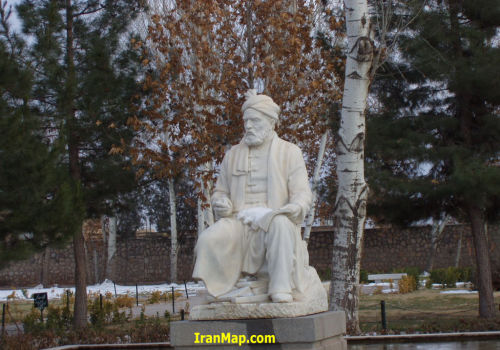
Persian literature spans two and a half millennia, though much of the pre-Islamic material has been lost. Its sources often come from far-flung regions beyond the borders of present-day Iran, as the Persian language flourished and survives across wide swaths of Central Asia. For instance, Rumi, one of Persia’s best-loved poets, wrote in Persian but lived in Konya, now in Turkey and then the capital of the Seljuks. The Ghaznavids conquered large territories in Central and South Asia and adopted Persian as their court language. There is thus Persian literature from areas that are now part of Afghanistan and other parts of Central Asia.

Not all this literature is written in Persian, as some consider works written by ethnic Persians in other languages, such as Greek and Arabic, to be included.

Surviving works in Persian languages (such as Old Persian or Middle Persian) date back as far as 650 BCE, the date of the earliest surviving Achaemenid inscriptions. The bulk of the surviving Persian literature, however, comes from the times following the Islamic conquest of Persia circa 650 CE. After the Abbasids came to power (750 CE), the Persians became the scribes and bureaucrats of the Islamic empire and, increasingly, also its writers and poets. Persians wrote both in Arabic and Persian; Persian predominated in later literary circles. Persian poets such as Sa’di, Hafiz, Rumi and Omar Khayyam are well known in the world and have influenced the literature of many countries. Read more

Architecture

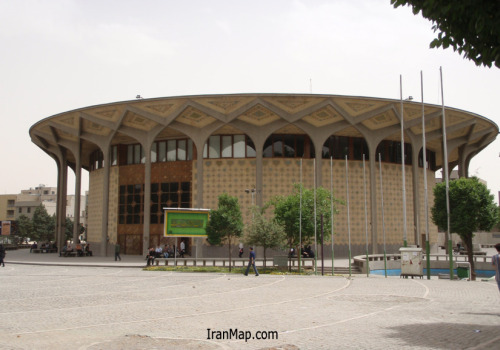
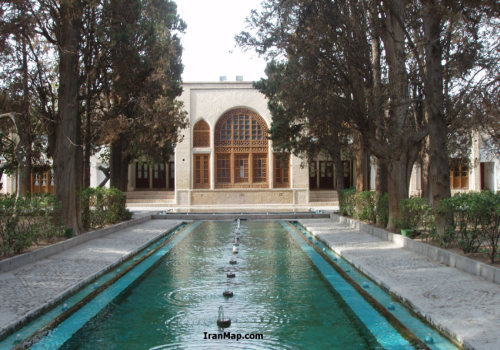
Architecture in “Greater Iran” has a continuous history from at least 5000BCE to the present, with characteristic examples distributed over a vast area from Syria to North India and the borders of China, from the Caucasus to Zanzibar. Persian buildings vary from peasant huts to tea houses, and garden pavilions to “some of the most majestic structures the world has ever seen”.

Iranian architecture displays great variety, both structural and aesthetic, developing gradually and coherently out of prior traditions and experience. Without sudden innovations, and despite the repeated trauma of invasions and cultural shocks, it has achieved “an individuality distinct from that of other Muslim countries”. Its paramount virtues are several: “a marked feeling for form and scale; structural

inventiveness, especially in vault and dome construction; a genius for decoration with a freedom and success not rivaled in any other architecture”.

Traditionally, the guiding, formative, motif of Iranian architecture has been its cosmic symbolism “by which man is brought into communication and participation with the powers of heaven”. This theme, shared by virtually all Asia and persisting even into modern times, not only has given unity and continuity to the architecture of Persia, but has been a primary source of its emotional characters as well.

“The supreme Iranian art, in the proper meaning of the word, has always been its architecture. The supremacy of architecture applies to both pre-and post-Islamic periods.” Read more

Art

Iranian art has gone through numerous phases of evolution. The unique aesthetics of Iran is evident from the Achaemenid reliefs in Persepolis to the mosaic paintings of Bishapur. The Islamic era drastically brought changes to the styles and practice of the arts, each dynasty with its own particular foci.

The Qajarid era was the last stage of classical Persian art, before modernism was imported and suffused into elements of traditionalist schools of aesthetics.

The Iranian cultural region - consisting of the modern nations of Iran, Afghanistan, Tajikistan, Azerbaijan, Uzbekistan, and surrounding regions - is home to one of the richest art heritages in world history and encompasses many disciplines including architecture, painting, weaving, pottery, calligraphy, metalworking and stone masonry. Read more

Trackback URI | Comments RSS

Leave a Reply

You must be logged in to post a comment.